
Peridot
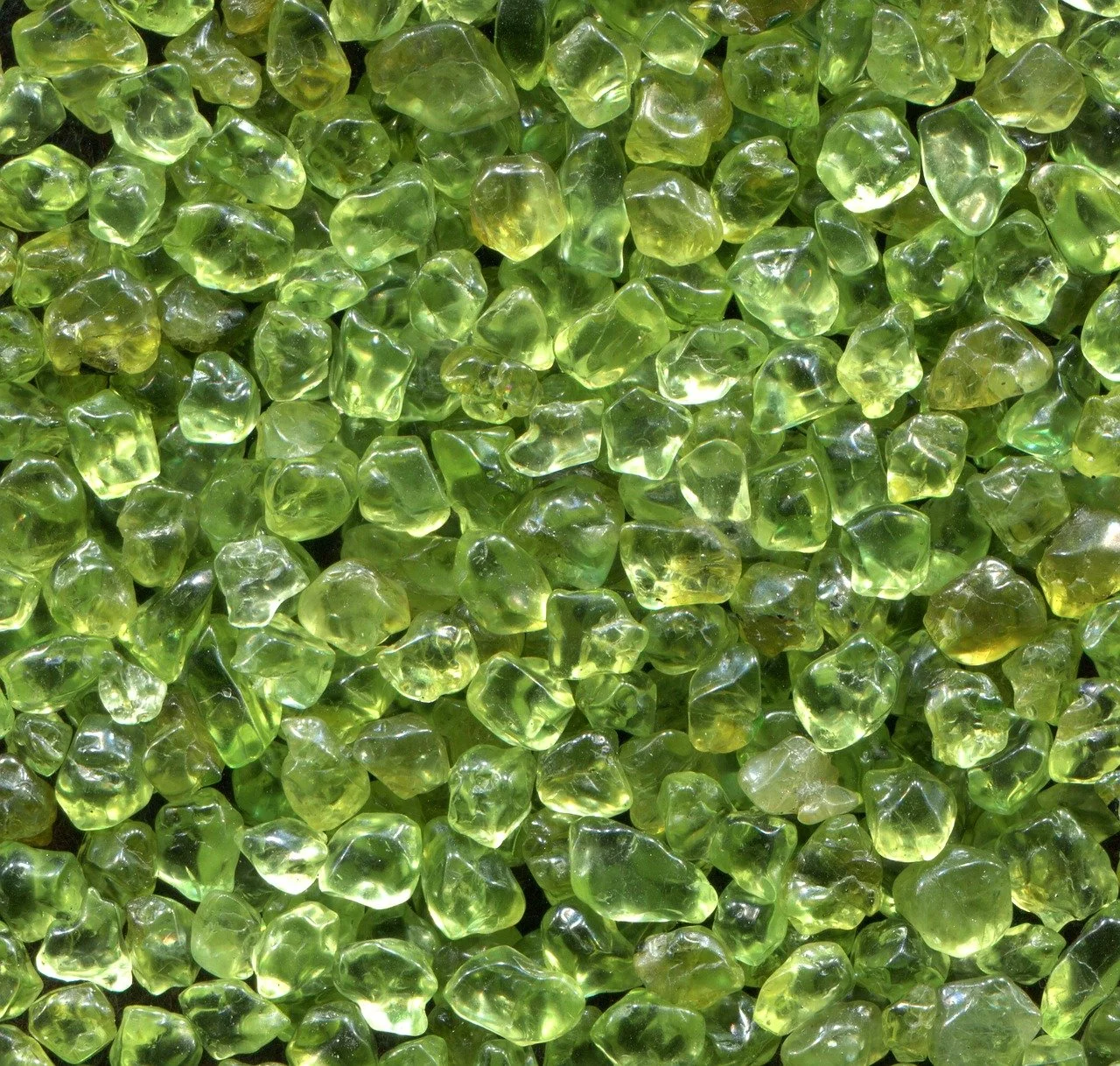
Peridot is a vibrant green crystal with deep roots in spiritual and historic lore. Here, I cover its metaphysical uses, chakra alignment, elemental and geological origins, and how it has been viewed throughout history, blending ancient insight with modern lore.
Author: Luna Date: 9/30/25
-
Chakra Associations:
Heart Chakra (Anahata) → compassion, renewal
Solar Plexus Chakra (Manipura) → confidence, growth
Deity Associations:
Apollo (Greek/Roman) – sun, clarity
Isis (Egyptian) – protection, renewal
Lakshmi (Hindu) – prosperity, abundance
Pele (Hawaiian) – transformation, power
Angel Associations:
Archangel Raphael – healing, renewal
Archangel Michael – courage, protection
Archangel Uriel – wisdom, clarity
Planetary Associations:
Sun – vitality, clarity
Mercury (secondary) – communication, adaptability
Birthstone:
Modern: August (primary birthstone)
Traditional: Also linked to Leo + Virgo energy
Crystal Pairings:
Rose Quartz → compassion + love
Citrine → abundance + joy
Amethyst → spiritual clarity
Black Tourmaline → protection + Grounding
Green Aventurine → growth + optimism
Metaphysical Uses:
Boosts confidence and self-worth
Attracts prosperity and new opportunities
Promotes emotional + energetic healing
Dispels fear, guilt, and negativity
Encourages transformation and fresh starts
Enhances clarity and spiritual insight
-
Peridot is a gem-quality variety of Olivine, a magnesium-iron silicate. It forms deep in the Earth’s upper mantle about 20 to 50 miles (roughly 30 to 80 km) below the surface, where temperatures exceed about 1,200 °C (2,200 °F).
As molten rock begins to cool, Olivine is one of the first minerals to crystallize. The amount of iron in the crystal lattice gives Peridot its green color: just the right balance produces the vivid, pure green most prized in gems.
Clarity and overall quality depend on how steadily the rock cools and how undisturbed the crystal remains while it grows. When the cooling is consistent and the crystal is protected from later fracturing or alteration, the result is the transparent, vibrant Peridot we recognize as a gemstone.
Magma chambers and lava tubes aren’t the only places Peridot forms. Gem-quality Olivine can also arrive in meteorites, specifically pallasites, and it can crystallize wherever magnesium- and iron-rich material experiences the intense heat and slow cooling needed for Olivine to grow.
-
Peridot is a gem-quality variety of Olivine, a magnesium-iron silicate. It forms deep in the Earth’s upper mantle about 20 to 50 miles (roughly 30 to 80 km) below the surface, where temperatures exceed about 1,200 °C (2,200 °F).
As molten rock begins to cool, Olivine is one of the first minerals to crystallize. The amount of iron in the crystal lattice gives Peridot its green color: just the right balance produces the vivid, pure green most prized in gems.
Clarity and overall quality depend on how steadily the rock cools and how undisturbed the crystal remains while it grows. When the cooling is consistent and the crystal is protected from later fracturing or alteration, the result is the transparent, vibrant Peridot we recognize as a gemstone.
Magma chambers and lava tubes aren’t the only places Peridot forms. Gem-quality Olivine can also arrive in meteorites, specifically pallasites, and it can crystallize wherever magnesium- and iron-rich material experiences the intense heat and slow cooling needed for Olivine to grow.
Locations found:
There are several locations where Peridot can be found such as San Carlos Apache Reservation in Arizona which is one of the worlds largest producers of facetable Peridot. Papakōlea Beach, on Hawaiʻi big island is famous for its green beach which is composed of tiny grains of Peridot that has eroded away from the basalt. The Magok region of Asia is historically known for some of the finest, large, deep green crystals. In the Xinjiang Province of China there is a significant source of Peridot. Pakistan is known to produce rich crystals that are clean of impurities. In Zabargad (St. John’s) Island in the Red Sea located in Egypt is a source that has been mined since antiquity. These are the most notable sources of Peridot, but it is not unheard of to get peridot from Norway, Finland, and Australia.
-
Peridot has been a popular crystal since approximately 1500 BC in Ancient Egypt where it was called the “Gem of the sun.” To the Egyptians Peridot radiated a brilliant golden green color and for them it reminded them of the sun and the life the sun brought with it. They used it to adorn their temples and royal jewelry. Peridot has a high refractive index leading to its continued shine and “glow “even in lamplight. They saw this as a symbol of the sun’s power and life-giving nature even after nightfall. They felt the gem represented their God Ra and as such it they felt it has protective qualities. For this reason, they carved Peridot into protective talismans; it was thought that this crystal could repel nightmares and dark forces especially after nightfall since the stone was powered by the sun god himself. The Gold and Peridot combination was a powerful ritual combination used to invoke Ra because both represented God and his power over light. This combination was often used in religious settings and worn by priests and royals alike in the form of rings, pendants, and ceremonial collars. Sometimes it would be ground down and mixed into healing preparations or worn against the skin. It was believed to draw down the sun’s energy and vitality providing the person with health. The Egyptians believed that Peridot would calm anger and open the heart keeping people in alignment with divine order. Peridot was often placed within tombs as jewelry and as offerings to guard the deceased on their journey through the afterlife to RA.
In Rome and Peridot was known by its Greek name Topazos and their love of the gem was for similar reasons as the ancient Egyptians. They felt the crystal symbolizing the sun and captured the sun’s rays within. They believed the gem would ward off the evil eye and malicious spirits. They often wore carved Peridot charms attached to cords to not only ward off evil but also envy and jealousy. Like the Egyptians they also believed that the stone's protective power was useful in guarding against night-time threats. Merchants and travelers would carry or wear the crystal to attract wealth, luck, and safe passage. The discovery of Roman magical texts and amulets Peridot was grouped with other stones that brought fortune. Gold represented Sol (later the Sol Invictus) and Pliny the Elder mentioned setting Peridot in gold setting to magnify its power. Because again the combination represents the power of the Sun. Folk healers would use the stone to cool fevers or to calm anger and agitation. Sometimes it would be placed in a pouch to be carried or on the body.
Greece had similar views and uses for Peridot, but for them they used it to represent not only the Sun God Helios and Apollo, but also Poseidon. The gem was often used in protection and healing magic; either carved into amulets or placed in rings to ward off the evil eye, malevolent spirits, and envy, or used to ward off fevers by drawing on the sun’s vitality. It was also used as temple offerings, left at altars, or hung on statues as symbols of gratitude or as petitions for favor among the Gods. During the Hellenistic period it was recommended to set Peridot in gold to magnify its power, though the practice was not as widely used in Greece as it was in Rome or Egypt. Natural philosophers would describe gems in terms of the four natural elements and cosmic sympathy. In their philosophy like attracts like and Peridot with its sun-colored glow was believed to be a manifestation of fire which made it a natural medium for calling divine light and energy.
In India the stone was known as green Topaz and was used in talismans for protection much like other cultures of the time. The crystal was also mentioned in ancient Ayurvedic texts such as the Garuda Purana and later Ratna Shastras describe green gemstones as cooling and balancing for excess pitta (fire element). In India it was also used in medicine for the same reasons as Greece which also aligns with some of today’s metaphysical uses. India also had a Gold and Peridot combination used to invoke the power of the sun and enhance the crystals power. In Vedic astrology the crystal is associated with mercury and set in gold and worn on the little finger on a Wednesday to enhance eloquence, memory, and financial luck. Priests would bath the stone in milk to charge it before wearing it or placing it in pouches. They would place it on yantras which are sacred geometric designs for spiritual purposes. During Puja the gems were used as ritual offerings to Vishnu or Ganesh as symbols of prosperity and growth. Peridot is still used in spiritual practices even today and is often used as a cheaper alternative to Emerald for Mercury aligned stones.
Peridot held a place in many ancient cultures, often carrying similar meanings and uses. When it comes to early Buddhist and Chinese traditions, though, there’s no solid historical record of its use. That doesn’t mean it was unknown, only that written sources and artifacts don’t confirm it. It’s likely the stone reached China later, carried along the Silk Road, where texts mention green gems that could have been Peridot. Still, no tangible evidence has surfaced to show that Peridot played a defined role in those traditions.
-
Today, Peridot is embraced as a stone of renewal and heart-centered energy. Many people use it to invite prosperity and growth, both in a practical sense and as a way to nurture personal confidence and self-worth.
It’s often seen as a crystal of emotional balance, helping to release old resentment or jealousy and to open space for compassion toward others and toward ourselves. When it is used in meditation or energy work, Peridot is said to activate the heart and solar plexus chakras, encouraging warmth, optimism, and a sense of inner light.
Some keep it in a place of abundance such as a workspace, altar, or wallet to call in opportunities, while others wear it as jewelry, so its bright, sunlit energy stays close. Whether you view it as a symbol of the sun or simply a reminder of growth and vitality, Peridot continues to be used as a gentle ally for healing, protection, and new beginnings.
DisclaimerAll content on this website, including descriptions of crystals and their historical or metaphysical associations, is provided strictly for informational purposes only. These materials are not intended to diagnose, treat, cure, or prevent any disease or medical condition.
I am not a medical professional, and no information presented here should be construed as medical advice or as a substitute for professional consultation, diagnosis, or treatment. Always seek the guidance of a licensed physician or other qualified healthcare provider with any questions regarding your health, medical condition, or treatment options.
Crystals, minerals, and stones are natural materials. Any traditional, cultural, or historical uses described are not scientifically substantiated and should be understood as folklore or symbolic associations only. Reliance on such information is entirely at the discretion and risk of the individual.
-
Peridot carries the warmth of the sun and the energy of renewal. In Feng Shui, it is used to brighten spaces, inspire growth, and strengthen confidence.
South (Fame & Recognition – Fire Element)
Placement: Back middle area of the home or workspace.
Purpose: Increases visibility, supports success, and shines light on your talents.
Energy Invited: Confidence, growth, and recognition for your work.
Forms Used: Faceted pieces, bright polished stones, pyramids.
Pairings:
Peridot + Citrine → joy and abundance
Peridot + Amethyst → spiritual growth with clarity
Peridot + Clear Quartz → amplified renewal and healing
East (Health & Family – Wood Element)
Placement: Left middle area of the home.
Purpose: Encourages harmony and renewal in family dynamics.
Energy Invited: Healing, optimism, and resilience.
Forms Used: Clusters, raw pieces, leafy green crystal grids.
Pairings:
Peridot + Green Aventurine → growth and optimism
Peridot + Rose Quartz → compassion and trust
Peridot + Selenite → gentle purification with renewal
Bedroom (Personal Growth & Renewal)
Placement: Near the bed or under a pillow for emotional healing.
Purpose: Supports emotional renewal and breaks cycles of fear or guilt.
Energy Invited: Peace, transformation, optimism.
Forms Used: Tumbled stones, small spheres, jewelry.
Pairings:
Peridot + Rose Quartz → emotional healing and trust
Peridot + Amethyst → protection and transformation
Peridot + Black Tourmaline → grounding during change
Disclaimer
All content on this website, including descriptions of crystals and their historical or metaphysical associations, is provided strictly for informational purposes only. These materials are not intended to diagnose, treat, cure, or prevent any disease or medical condition.
I am not a medical professional, and no information presented here should be construed as medical advice or as a substitute for professional consultation, diagnosis, or treatment. Always seek the guidance of a licensed physician or other qualified healthcare provider with any questions regarding your health, medical condition, or treatment options.
Crystals, minerals, and stones are natural materials. Any traditional, cultural, or historical uses described are not scientifically substantiated and should be understood as folklore or symbolic associations only. Reliance on such information is entirely at the discretion and risk of the individual.